










Wasps are easily identifiable insects, with their distinctive black and yellow striped colouring and thin bodies, with a tightened abdomen giving the appearance of a waist.
Being predators that eat aphids and other garden insect pests, as well as pollinators, wasps are actually quite useful and their presence alone isn’t an issue.
The problems arise when wasps build nests on or near your property. A wasp nest nearby can increase your risk of painful stings, and large wasp nests, particularly if built on roof beams or inside chimneys, can cause structural issues.
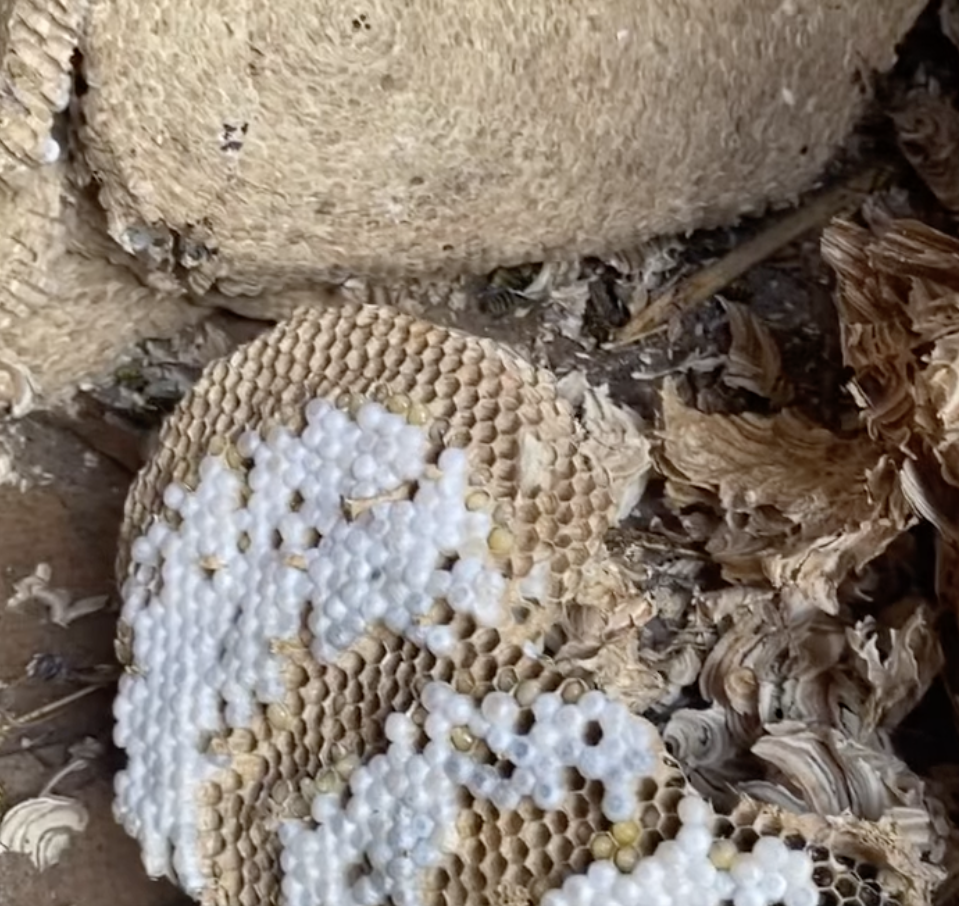
So, you may be wondering: what does a wasp nest look like? Wasp nests are usually grey to brown in colour and range between the size of a golf ball and a basketball, or larger. The exact size, shape and colour depends on the wasp species.
Essex Pest Proof has extensive expertise carrying out wasp nest removal across Southend, Chelmsford, Billericay, Basildon and throughout Essex, which is why we’ve put together this guide to help you identify wasp nests.
What Are Wasp Nests Made From?
Wasp nests are made from chewed wood pulp, gathered from nearby trees or other wood sources, such as furniture and beams.
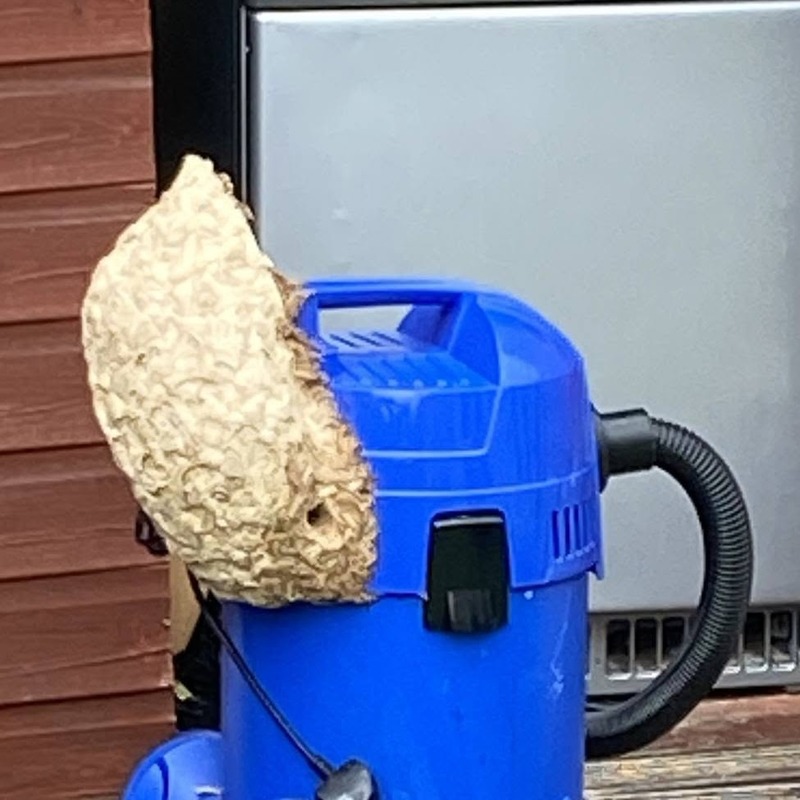
This wood pulp is mixed with wasp saliva to create the nests, making them look like they’re made from papier-mâché.
The outside of a wasp nest usually swirled patterns and a small hole at the bottom for wasps to enter and exit.
In some cases, you might be able to see hexagonal cells, which are where the queen wasp lays eggs and grows the colony.
Types Of Wasp Nest
There are around 9000 different wasp species found in the UK, but most of them are not classed as pests, as they are solitary wasps that live alone for most of their lives. Social wasp species, including the common wasp, German wasp and European hornet, are the ones that live in colonies and build large nests. Some of the types of wasp nest found in the UK, and their distinguishing features, are listed below.
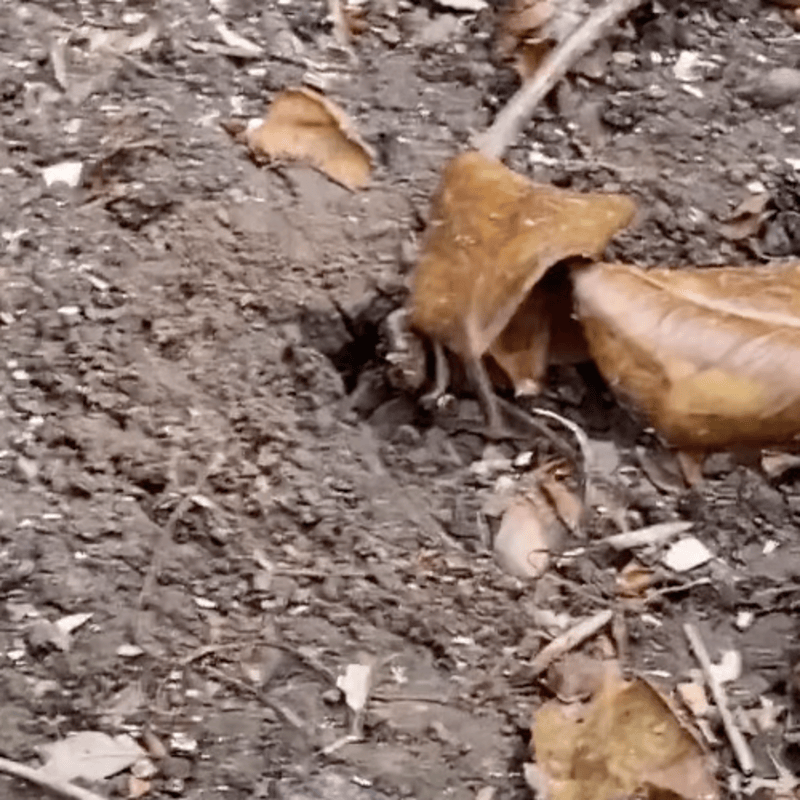
Solitary Wasp Nests
Solitary wasps are the most common type of wasps in the UK, but they generally don’t bother humans. Most solitary wasp species build nests underground, so their nests are not an issue to humans and are rarely noticed.
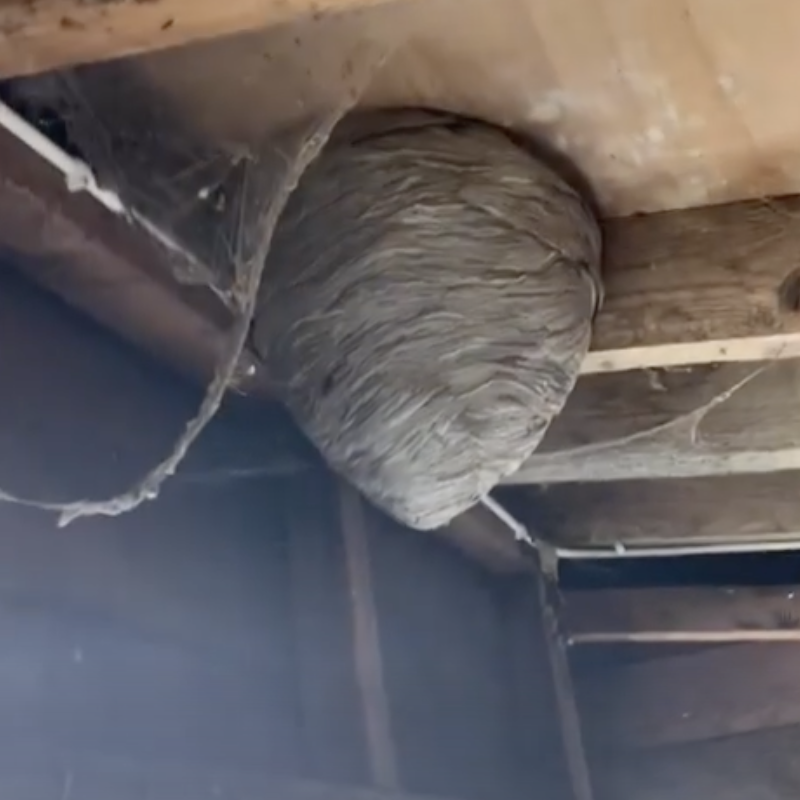
Common Wasp Nests
As the name suggests, common wasps among the most prevalent wasp species in the UK, and if you find a wasp nest it’s probably one of theirs. Common wasp nests have a swirled outer shell, and are grey to light brown in colour. They are usually oval in shape, but can spread out to fill a gap inside a bird box, roof eaves or another structure. There is a small hole, usually at the bottom, for worker wasps to use as they fly off to collect food for the queen wasp and the larvae inside the nest. This is the most common style of wasp nest, and looks similar to German wasp nests.
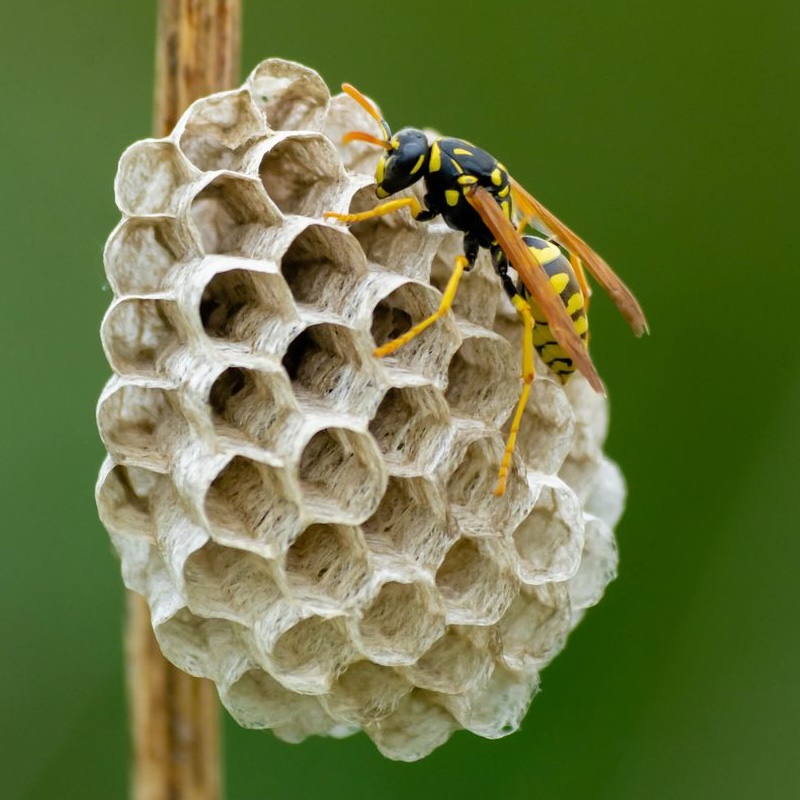
Paper Wasp Nests
While rarer than other species, paper wasps are found in the UK, and they build distinctive nests with the hexagonal cells on the outside. The nest is made from chewed wood pulp, and usually built hanging upside down from tree branches or roofs, and look like upside down umbrellas.
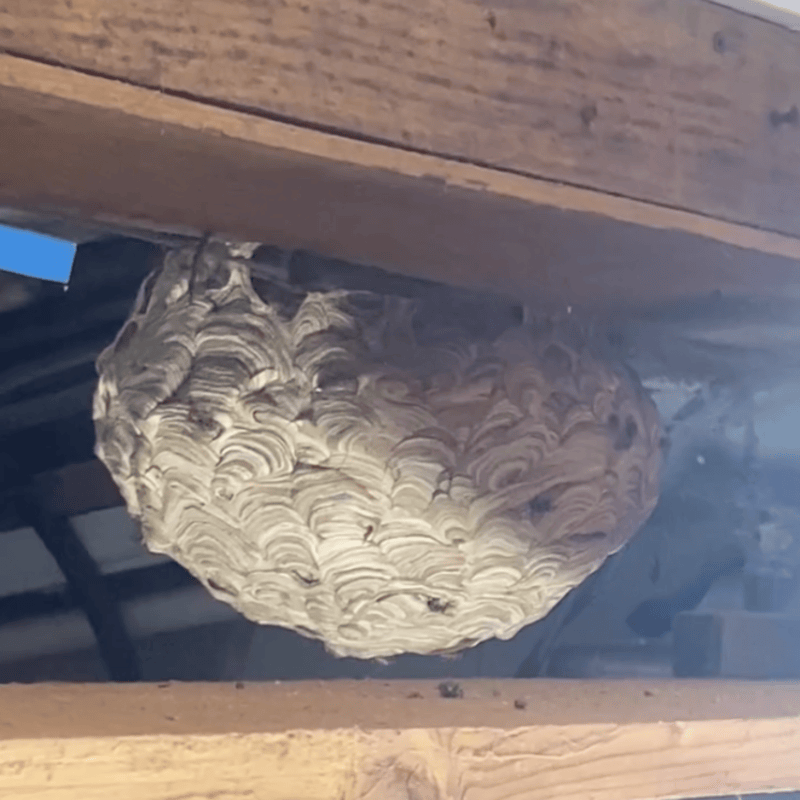
Hornet Nests
Hornets are a type of wasp, which is why their nests look similar to wasp nests. The main difference between most wasps and hornets is that hornets are significantly larger, as are their nests. Hornet nests are usually built high off the ground, and are more distinctly oval or round in shape, as opposed to wasp nests, which often spread out to fill gaps.
Wasp Nests VS Bee Nests
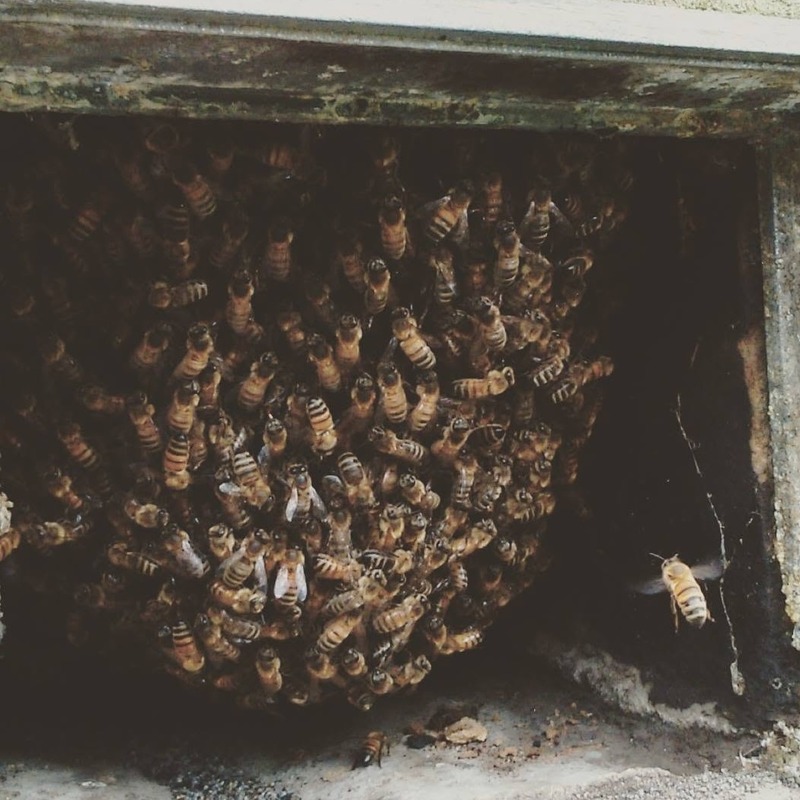
Wasps are often confused with bees, as are their nests, but these are two completely different species. Some of the main differences between bee and wasp nests are:
- Material: Wasp nests are made from chewed wood pulp, while bees build nests from wax, which makes them wetter.
- Colour: The wax bees make their nests from gives them a golden colour, whereas wasp nests are grey to dull brown.
- Shape: Bee nests are often built with the hexagonal cells on the outside, and a swarm of bees will cover these cells, whereas many wasp nests are more contained behind an outer shell of chewed wood pulp.
- Location: Wasps will build nests in more open spaces than bees, which often seek dead tree trunks and other tight spaces to build nests, but sometimes wasps will use these areas as well, so this isn’t a definitive difference.
- Lifespan: Many bees use their nests for many years, whereas wasps abandon their nest after each season. So, if you see an empty nest, it was most like a wasp nest.
What To Do If You Find A Wasp Nest
If you find a wasp nest on your property, then you need professional help. Dealing with a wasp nest on your own can be dangerous, as you could face painful stings, which can cause skin irritation or even anaphylactic shock if you’re allergic to wasps.
Also, social wasps often build nests in tight spaces, such as chimneys, wall cavities and others, which might mean that minor building work is required to ensure no further structural damage is caused.
Essex Pest Proof has extensive experience carrying out wasp nest removal across Essex. Our team can ensure the wasps are removed safely and provide pest proofing and advice to reduce the chances of a future wasp problem.
Alongside wasps, we can also get rid of rats, mice, squirrels, ants, bed bugs, cockroaches, fleas, moths, and even nuisance birds.
As well as our domestic and commercial pest control services, we also offer licensed waste removal, drain surveys, loft clearance, loft insulation replacement, pest proofing, and pigeon proofing for solar panels.
So, we’re the only pest control company you’ll ever need. If you’re dealing with a wasp nest or any other pest control issue, contact us on 01702 540 345 or email info@essexpestproof.co.uk.